Applied Environmental Research as a Foundation for Sustainable Development in Indonesia
Applied Environmental Research as a Foundation for Sustainable Development in Indonesia
Indonesia is endowed with extraordinary environmental diversity, ranging from extensive coastlines and coral reefs to tropical forests, karst landscapes, and small island ecosystems. These natural assets are vital for economic growth, food security, and community livelihoods. However, rapid development, climate change, and increasing environmental pressures demand a more balanced approach—one that integrates economic progress with ecological protection. Applied environmental research plays a crucial role in achieving sustainable development in Indonesia by providing scientific foundations for informed decision-making and effective field implementation.
The Importance of Applied Environmental Research
Applied environmental research focuses on practical solutions to real-world environmental challenges. Unlike purely academic studies, applied research translates scientific knowledge into actionable strategies that can be implemented in development planning and environmental management.
In Indonesia, applied research is essential due to the complexity of ecosystems and socio-economic conditions. Environmental issues often intersect with community livelihoods, infrastructure development, and regulatory frameworks. Through applied research, environmental data can be transformed into tools that guide sustainable land use, resource management, and policy formulation.
Science-Based Decision Making for Development
Sustainable development requires decisions grounded in accurate and reliable data. Applied environmental research provides baseline information on ecosystem health, biodiversity, water quality, and environmental risks. These data sets are fundamental for environmental impact assessments, spatial planning, and risk management.
By using standardized methodologies and scientific analysis, applied research minimizes uncertainty and supports transparent decision-making. This approach helps stakeholders balance development objectives with environmental protection, ensuring that projects align with sustainability principles.
Integrating Research into Environmental Planning
One of the most significant contributions of applied environmental research is its role in environmental planning and regulatory compliance. In Indonesia, development activities must adhere to environmental regulations such as AMDAL, RKL-UPL, and KPRPL. Applied research supports these processes by providing scientifically sound assessments and management plans.
Environmental planning informed by research helps identify potential impacts early, allowing mitigation measures to be incorporated into project design. This proactive approach reduces environmental risks, prevents costly delays, and improves project sustainability.
Supporting Coastal and Marine Sustainability
Indonesia’s coastal and marine environments are among the most productive ecosystems on Earth. Applied environmental research supports sustainable coastal development by analyzing oceanographic conditions, habitat distribution, and human activities.
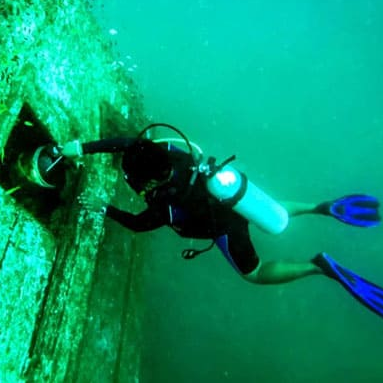
Research-driven approaches are critical for managing fisheries, protecting coral reefs, restoring mangroves, and safeguarding small island ecosystems. By combining field surveys, spatial analysis, and long-term monitoring, applied research ensures that conservation efforts are effective and adaptive to environmental change.
Ecosystem Restoration and Rehabilitation
Degraded ecosystems pose challenges to sustainable development. Applied environmental research guides restoration and rehabilitation efforts by identifying appropriate techniques and success indicators. In mangrove rehabilitation, for example, research determines suitable species, planting methods, and hydrological conditions to ensure long-term survival.
Similarly, coral reef restoration relies on scientific understanding of reef structure, water quality, and ecological interactions. Through applied research, restoration initiatives become more efficient, measurable, and resilient.
Managing Environmental Risks and Uncertainty
Environmental risks such as pollution, coastal erosion, and industrial accidents can undermine development goals. Applied environmental research plays a key role in identifying, assessing, and managing these risks. Scientific assessments enable early detection of environmental threats and support the development of mitigation and response strategies.
In marine environments, applied research is particularly important for assessing the impacts of shipping activities, offshore infrastructure, and accidental spills. Reliable data and field expertise help ensure that environmental risks are addressed promptly and responsibly.
Community Engagement and Local Knowledge
Sustainable development cannot be achieved without community participation. Applied environmental research increasingly integrates local knowledge and community perspectives into scientific analysis. This integration enhances the relevance and acceptance of research outcomes.
By involving local communities in data collection, monitoring, and implementation, applied research fosters shared ownership and strengthens environmental stewardship. This participatory approach contributes to long-term sustainability and social resilience.
From Research to Field Implementation
The true value of applied environmental research lies in its implementation. Research findings must be translated into practical actions that deliver tangible environmental and social benefits. Field implementation ensures that scientific recommendations are tested, refined, and adapted to local conditions.
Applied research supports the development of best practices, pilot projects, and demonstration models that can be replicated across regions. These proven approaches become foundations for broader sustainable development initiatives in Indonesia.
Conclusion
Applied environmental research is a cornerstone of sustainable development in Indonesia. By bridging science and practice, it provides the knowledge, tools, and strategies needed to manage natural resources responsibly while supporting economic growth.
As environmental challenges grow more complex, the role of applied research becomes increasingly critical. Through science-based planning, effective implementation, and stakeholder collaboration, applied environmental research will continue to shape a more sustainable and resilient future for Indonesia.

PT. Matabima Bersama Indonesia
Jl. Magelang Km 4 No. 188 RT.008 / RW 003, Karang Waru, Tegalrejo, Yogyakarta.
WhatsApp :
8112639439
Phone : 08112639439
© Copyright 2026, PT Matabima Bersama Indonesia. All Rights Reserved.